Over the summer break I managed to complete a few courses on Future Learn.One of them touched on the topic of osmosis. I mentioned last year an easy practical for that topic (click here to read more) and this demo is a great addition to that lesson.
Summer holidays are over and many of us have already been either teaching or planning units of work to teach very soon. Below is a list of some of my favourite tools and experiments I tested last year with a very good outcome. Hope it inspires you to try something new with your students.
I was recently introduced to a versatile online tool which is supporting my Grade 8 MYP students in their research. I'm talking about Noodle Tools, an online tool created to help you plan, create and work together on projects.
As a teacher, you have inboxes for your classes:
You can easily check your students' work; what sources they gathered:
How many note cards they created:
How detailed are their note cards:
This tool makes it very easy to teach your students how to organise their research well. This is a vital skill for IB and obviously for their studies at university. Noodle Tools allows you to group your note cards, colour-code them and even assign a hashtag so you can easily filter in search for information.
One of my favourite features is the bibliography option which allows you to import all of your cited works into MS Word in seconds. Additionally, you can also set up which style you need the reference list to be (APA, MLA, etc.).
I would like to share an experiment your students can do to understand the process of osmosis. It's easy and cheap to set up. It also allows your pupils to further improve their lab skills.
To conduct the experiment you need a cucumber, some table salt, a table spoon, 200ml of tap water, 200ml of distilled water and a balance.
I was working with grade 8 MYP students in this class. I introduced them to magnetic stirrer as well to help with dissolving the salt.
We used 200 ml of both tap and distilled water and dissolved two tablespoons of salt. To keep the results consistent we decided to weigh the salt and use 34g.
We managed to get the first results after 1 hour in lesson, I took the second measurements for the pupils 2 hours into the experiment. Our last measurement was done the following day.
Lastly, I gave the students freedom to collate the results as a class an this is the table they put together:
Click the table to enlarge it
We also decided to merge science and art and create posters to compare osmosis and diffusion.
Here are full instructions from the authors of this experiment:
I came across this experiment when doing "Basic Science: Understanding Experiments" course on Future Learn (click here).
The Wonderlab offers over 50 hands-on exhibits which will make you feel like a true scientist. The Science Shows offer brilliant learning experiences for everyone. You can even have your birthday party there!
I came across this brilliant challenge which will allow your students to explore nature. It's called City Nature Challenge and it's all about engaging with nature and being a good observer. Here is a video from Cape Town which nicely explains how you can participate:
As you can see from the video it is very easy to participate. I hope the weather will be great this weekend so that everyone can get beautiful pictures!
Working in a bilingual school makes you really think about the vocabulary you are teaching. I have just started the Cells unit with my grade 8 MYP students and the vocabulary list is pretty extensive. To support my pupils, we created a bilingual vocabulary wall.
I started by translating the list into Chinese using Google translate. To make sure that the translation is accurate, I asked my phenomenal technician to review it. Once she added her corrections, I used the list as a starter and asked my students to write down the words on cards I prepared early. What's more, we can add more words as we progress with the unit. Simple yet effective, that's what I like :)
Today I would like to share with you a phenomenal YouTube channel called acapellascience. Tim Blais is an absolute genius who changes the lyrics of popular songs into scientific beauty. My students absolutely love his videos and other teachers I know also use them for revision. Here are a few more of my favourites:
I absolutely love traveling and discovering new places. I always look for science-related locations where I can get inspirations. In my new weekend series I'm going to share some of the places I visited so far.
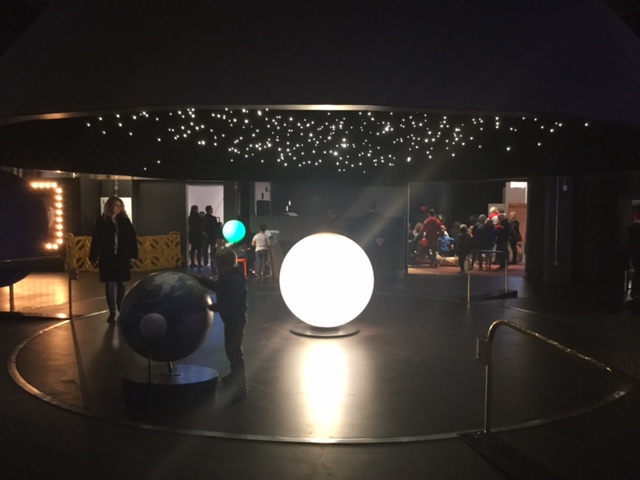
I'm going to start with photo inspirations from the Science Museum in London where you can visit The Winton Gallery which allows you to explore the importance of mathematics and its role in the world we are living in. Great place to visit with your students.
Hands-on activities provide the best opportunities for students to learn new skills. When designing the scheme of work for my Science Clubs, I like to include a session on soap and bath bombs making. It's a great opportunity to make links between science and real life applications. Below are my tried and tested ways of delivering the session.
Soap making
Here are the ingredients to make soap:
- 100 ml liquid soap/shower gel
- 1 teaspoon of salt
- 20 g gelatin
- 100 ml water
- optional: oats (this will scrub away dead skin cells)
To make your soap, dissolve the gelatin in in hot water. Once cooled down, mix well with your liquid soap or shower gel and pour into molds.
Bath bombs
The recipe that has worked the best for me is the following one I came across when I was ordering the ingredients for the session:
I hope you're going to try this with your students.
I recently had to teach a lesson on upthrust. I wanted to make it more interesting with a class practical and not just have a dry, theoretical lesson. After some research, I came across an interesting practical called "Design a boat" (click here). Despite being designed for primary students, I used it with my Grade 8 MYP Science classes. I was extremely pleased with how much engagement and scientific discussion it created. I really enjoyed watching my pupils going through many designs, testing them and trying to improve it. Having them talk about real life applications was brilliant.